

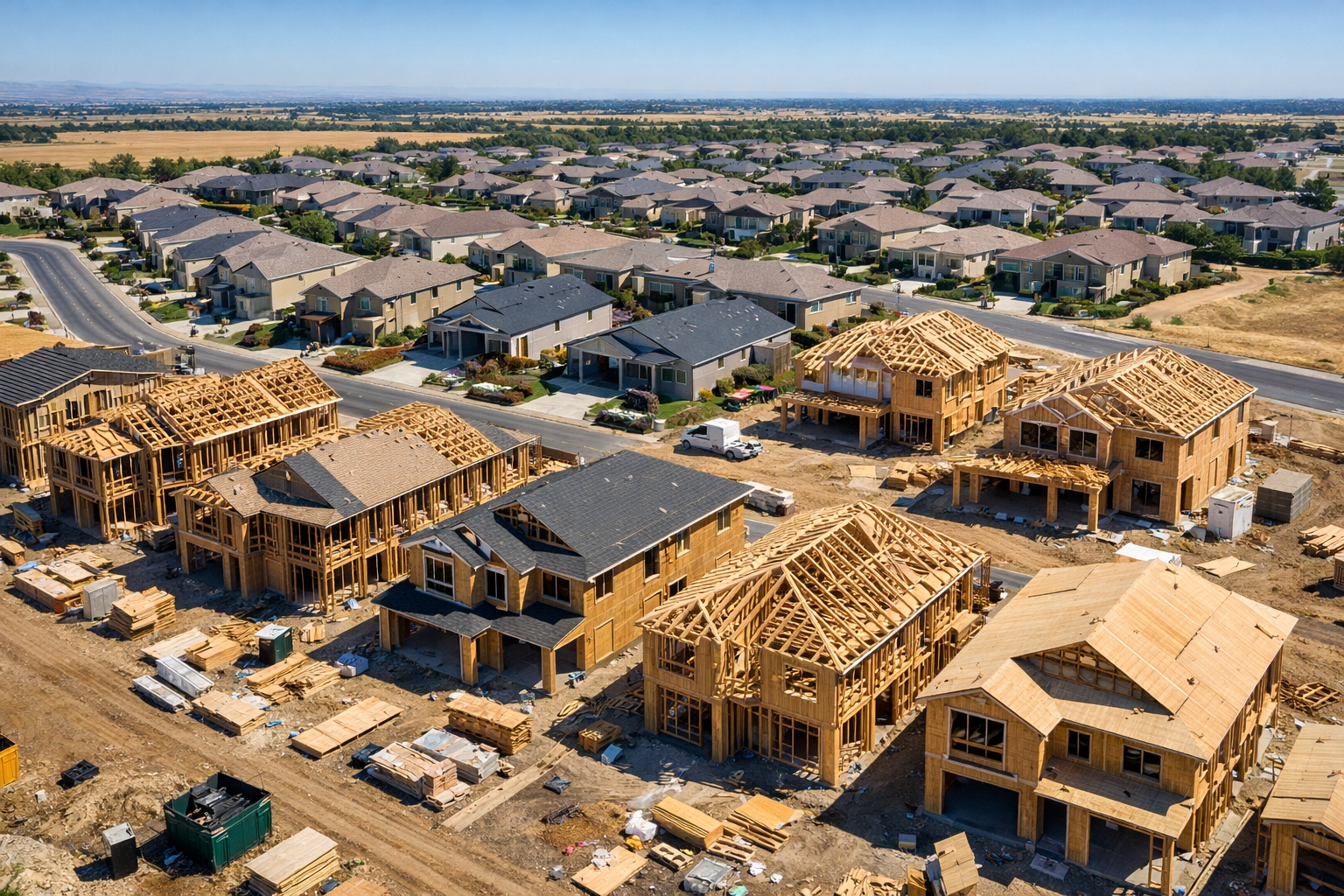
Over the past several years, Lincoln, CA has quietly transformed into one of Placer County’s most attractive growth markets.
Located in Lincoln within Placer County, the city offers:
- Expanding residential communities
- Larger lot sizes compared to Sacramento suburbs
- Access to top-rated schools
- Commuter proximity to Sacramento
- A blend of suburban comfort and semi-rural space
For many buyers, resale inventory can feel limited or outdated. That’s why more homeowners are exploring the option to build from the ground up.
But financing new construction isn’t the same as getting a traditional mortgage.
And that’s where many buyers get confused.
What Is a New Construction Loan?
A new construction loan is a short-term loan designed to finance the cost of building a home. Unlike a traditional mortgage, which funds a completed property, this loan covers:
- Land purchase (if needed)
- Builder labor
- Materials
- Permits
- Plans and architectural fees
Instead of receiving one lump sum, the builder is paid in scheduled draws as construction progresses.
Once the home is completed, the loan either:
- Converts into a traditional mortgage (construction-to-permanent), or
- Requires a second closing to refinance into a long-term loan (two-time close)
Understanding this structure is critical before you break ground.
Construction-to-Permanent vs. Two-Time Close Loans
Think of these as two different roads leading to the same destination.
Construction-to-Permanent (One-Time Close)
This is the more streamlined option.
You close once.
The loan covers construction.
After completion, it automatically converts into a traditional mortgage.
Advantages:
- One closing cost
- Locked rate options (depending on structure)
- Simpler process
Two-Time Close Construction Loan
Here, you close twice:
- First closing: Construction loan
- Second closing: Permanent mortgage
Advantages:
- Flexibility to shop rates after build
- Useful if rates may decline
For buyers in Lincoln, where construction timelines can run 8–12 months, understanding rate risk matters significantly.
How New Construction Loans Work (Step-by-Step)
Let’s break it down clearly.
Step 1: Pre-Approval
Before choosing a builder or buying land, you need full underwriting pre-approval and not just pre-qualification.
This includes:
- Income verification
- Credit review
- Debt-to-income analysis
- Asset documentation
Step 2: Select a Builder
Your lender will require:
- Licensed contractor
- Builder financial review
- Detailed cost breakdown
- Signed construction contract
Owner-builders are far more difficult to finance and often restricted.
Step 3: Appraisal Based on Plans
This surprises many buyers.
The appraisal isn’t based on dirt and lumber, it’s based on the future value of the completed home, using plans, specs, and comparable new builds in Lincoln.
Step 4: Loan Closing & Construction Phase
Funds are distributed in stages:
- Foundation
- Framing
- Mechanical systems
- Interior finishes
- Final completion
Inspectors verify progress before each draw is released.
During this time:
- You typically make interest-only payments
- Payments are based on the amount drawn
Step 5: Conversion to Permanent Loan
After final inspection and certificate of occupancy, the loan converts (or refinances) into a standard mortgage.
That’s when traditional principal and interest payments begin.
Down Payment & Credit Requirements
Construction loans are considered higher risk, so requirements are typically stricter.
In California, most borrowers should expect:
- Down Payment: 10%–20% minimum
- Credit Score: 680+ preferred
- Reserves: 6–12 months of mortgage payments
- Low debt-to-income ratio
If you already own the land, that equity may count toward your down payment.
This is especially helpful for Lincoln buyers who purchased lots years ago when prices were lower.
What Costs Are Included in a Construction Loan?
Many buyers underestimate total costs.
Here’s what’s typically included:
- Land purchase (if applicable)
- Site preparation
- Utility hookups
- Architectural plans
- Builder labor
- Materials
- Permits
- Contingency reserve (often 5–10%)
- Interest reserve
However, some costs are not included:
- Landscaping beyond basic requirements
- Pools
- Detached structures (sometimes limited)
- Furniture or appliances outside contract
Budgeting properly protects you from mid-project stress.
Timeline: From Lot Purchase to Move-In
In Lincoln and broader Placer County, typical timelines look like this:
- Pre-approval & planning: 30–60 days
- Permitting: 30–90 days
- Construction: 6–12 months
Weather, labor availability, and material costs can influence the schedule.
Buyers who expect a resale-style 30-day closing are often shocked by how different this process feels.
Building a home is more like running a marathon than sprinting to closing.
Common Mistakes Lincoln Home Builders Make
Underestimating Contingency Needs
Material prices fluctuate. Surprises happen. A 5–10% buffer is essential.
Choosing the Wrong Loan Structure
Not understanding rate-lock strategy can cost thousands.
Skipping Builder Vetting
The lender will vet them, but buyers should too.
Ignoring Long-Term Payment Impact
Property taxes are reassessed at completed value.
Is Building Better Than Buying Resale in Lincoln?
It depends.
Building Makes Sense If:
- You want customization
- You plan to stay long-term
- Inventory is limited
- You value energy efficiency
Resale Makes Sense If:
- You need speed
- You prefer established landscaping
- You want negotiation leverage
Lincoln’s expanding developments mean both options are viable, but financing strategies differ dramatically.
How to Prepare Financially Before Applying for a New Construction Loan in Lincoln, CA
Financing a home build is not just about qualifying for a loan, it’s about positioning yourself strategically months before you ever submit an application.
New construction loans involve deeper underwriting scrutiny than traditional purchase mortgages. Because the lender is funding a property that does not yet exist, they assume additional risk. The more financially prepared you are upfront, the smoother your approval and construction process will be.
Here’s how to prepare intelligently.
Strengthen Your Credit Profile Early
Construction loan underwriting is less forgiving than conventional financing. Even small credit issues can trigger higher rates or additional reserve requirements.
Six months before applying, review your credit report carefully. Pay down revolving balances to reduce utilization below 30%, ideally under 20%. Avoid opening new credit lines. Do not finance vehicles or large purchases. Even small score improvements can significantly impact loan structure and pricing.
Because construction loans often require a 680+ score (sometimes higher for optimal terms), proactive credit management is critical.
Build Liquid Cash Reserves
Many buyers focus only on the down payment. That’s a mistake.
In addition to your required 10–20% down payment, lenders typically want to see:
- 6–12 months of future housing payments in reserves
- Cash to cover unexpected upgrades
- Funds available for change orders
- Emergency savings beyond construction
Remember: construction projects almost always experience minor cost adjustments. Having liquidity reduces stress and protects your timeline.
If you are planning to use proceeds from selling your current home, carefully coordinate timing to avoid gaps or forced decisions.
Keep Your Income Stable
Consistency is everything in construction financing.
Avoid changing jobs, transitioning from W-2 to self-employment, or altering your compensation structure during the approval process. Construction timelines can span 8–12 months, and lenders may re-verify employment before the permanent loan phase.
If you anticipate career changes, discuss timing strategically before beginning the loan process.
Reduce Your Debt-to-Income Ratio
Debt-to-income (DTI) ratios matter more with construction loans because lenders are evaluating long-term risk on a custom property.
If your DTI is near the upper limit:
- Pay down installment loans
- Eliminate small monthly obligations
- Avoid co-signing for others
- Consider delaying discretionary purchases
Even reducing DTI by a few percentage points can improve approval odds and pricing.
Understand Total Project Budget Realistically
One of the most common financial pitfalls in new construction is underestimating total costs.
Beyond the base construction contract, consider:
- Lot premiums
- Upgraded finishes
- Landscaping beyond minimum requirements
- Fencing
- Window coverings
- Appliance packages
- Utility connection fees
- Permit adjustments
Sit down with your builder and request a fully itemized cost breakdown. Ask specifically what is not included. The clearer your budget, the stronger your loan file will appear.
Plan for Property Tax Adjustments
Many buyers underestimate post-construction property taxes. When a new home is completed, taxes are reassessed based on the improved value, not the raw land.
This can significantly impact your future monthly payment.
Running realistic projections early helps prevent payment shock once construction converts to permanent financing.
Mentally Prepare for a Longer Timeline
Financial preparation is not just about numbers, it’s about expectations.
Construction loans require patience, documentation, inspections, and staged approvals. Being organized and responsive with paperwork can accelerate the process.
Think of it as building both a house and a financial structure simultaneously. When your financial foundation is solid, the rest of the process becomes far more predictable.
Preparing thoroughly before applying doesn’t just improve approval odds, it gives you confidence. And when you’re building a home from the ground up, confidence is just as important as capital.
Final Thoughts
Building a home in Lincoln isn’t just about picking countertops and paint colors.
It’s a financing strategy.
A timeline commitment.
And a long-term investment decision.
When structured correctly, a new construction loan allows you to design a home that fits your life rather than adapting your life to an existing property.
Understanding the process from start to finish ensures fewer surprises, stronger negotiation power, and smarter financial planning.
FAQs
How do new construction loans work in Lincoln, CA?
They fund the building process in stages and convert into permanent financing once construction is complete.
What credit score do I need for a construction loan in California?
Most lenders prefer 680+ for competitive terms.
How much down payment is required for a construction loan?
Typically 10–20%, depending on borrower profile and loan program.
Can I include land in my construction loan?
Yes, if purchased simultaneously or refinanced into the build.


