

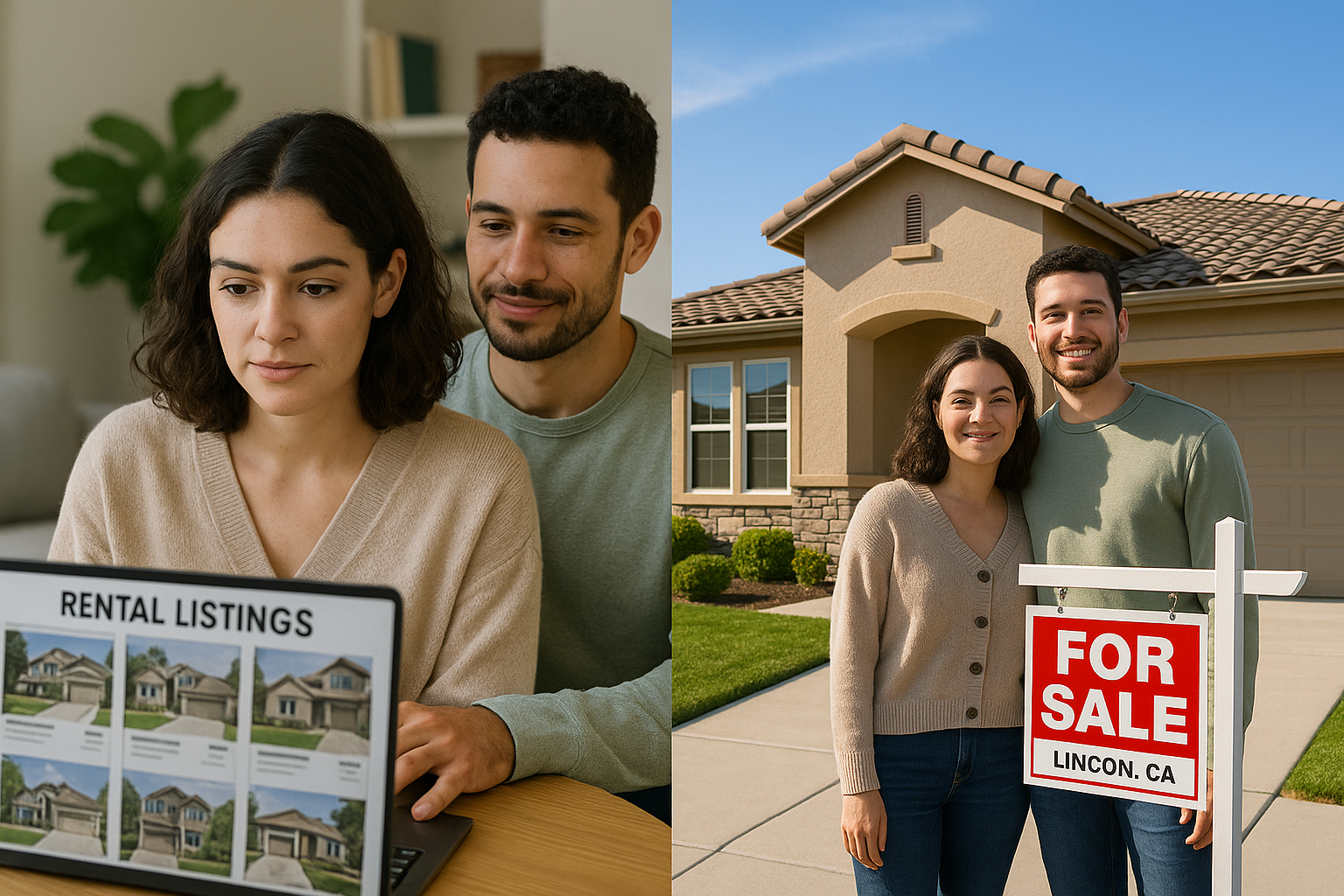
If you’ve been thinking about moving to Lincoln, California or already live here and are considering your next step, you’re not alone in asking a crucial question:
Is it better to rent or buy a home in Lincoln, CA in 2026?
With real estate prices shifting, interest rates stabilizing, and rental costs fluctuating, this question has never been more important or more complicated.
This guide will help you break it all down.
Lincoln, CA at a Glance: Why It’s a Hot Market
Nestled in Placer County, Lincoln is known for its small-town charm, family-friendly neighborhoods, and proximity to Sacramento.
Key 2026 Market Stats (as of Q4):
- Median Home Price: $578,000
- Average Rent (3BR Single-Family): $2,650/month
- Year-over-Year Home Price Growth: +4.1%
- Vacancy Rate (Rentals): 4.6%
Whether you’re drawn to the top-rated schools, new developments in Twelve Bridges, or the scenic Sun City Lincoln Hills community, there’s a good reason why Lincoln continues to attract both first-time buyers and long-term renters.
Renting in Lincoln: Pros, Cons, and 2026 Costs
Pros of Renting in Lincoln, CA:
- Flexibility to move without selling
- Lower upfront costs (security deposit vs. down payment)
- Maintenance-free living (repairs typically handled by landlord)
- Access to desirable neighborhoods without needing to qualify for a mortgage
Cons of Renting:
- No equity building—you’re paying someone else’s mortgage
- Rent increases are likely year to year
- Fewer customization options in your living space
- Limited stability if landlord sells or changes terms
2026 Rental Snapshot:
| Property Type | Avg. Monthly Rent |
|---|---|
| 1BR Apartment | $1,875 |
| 2BR Condo | $2,200 |
| 3BR Single-Family | $2,650 |
| Luxury 4BR Home | $3,250+ |
Lincoln’s rental prices have remained relatively stable, but they’ve inched up due to tight inventory and a growing commuter population from Sacramento.
Buying a Home in Lincoln: Advantages, Disadvantages, and What It Costs in 2026
Pros of Buying:
- Build equity and increase net worth
- Stable monthly payments with a fixed-rate mortgage
- Tax advantages (mortgage interest and property tax deductions)
- Creative control over your home (paint, remodel, landscaping)
Cons of Buying:
- High upfront costs (down payment, closing costs)
- Ongoing maintenance responsibilities
- Market risk—values can fluctuate
- Less mobility if life changes quickly
2026 Buying Snapshot:
| Home Type | Median Price |
|---|---|
| Entry-Level 3BR Home | $515,000 |
| Mid-Tier 4BR Home | $590,000 |
| New Construction | $620,000+ |
| Luxury/Gated Homes | $750,000+ |
For a typical buyer putting 10% down on a $578,000 home, your monthly mortgage (including taxes and insurance) would be around $3,450/month—a number that’s not far from comparable rent.
Rent vs. Buy Math: Real-World Scenarios in Lincoln, CA
Case Study: A 3BR Home in Lincoln
- Monthly Rent: $2,650
- Monthly Mortgage (10% down, 6.5% rate): $3,450
- Monthly Equity Built (Year 1): ~$800/month
- Annual Tax Benefit Estimate: ~$3,600
Break-even Point: Roughly 5 years. If you plan to stay longer, buying may save you money in the long run.
The 5-Year Rule Still Applies
If you’re planning to stay in Lincoln for at least 5 years, the long-term benefits of owning often outweigh renting, especially with modest home appreciation.
How Mortgage Rates, Taxes & Local Policy Are Affecting the Market
Mortgage Rates:
Rates in 2026 have cooled from their 2022–2023 highs, with 30-year fixed loans hovering around 6.25%. Many buyers are now exploring mortgage points or temporary buydowns to secure better affordability.
Taxes:
Placer County’s property tax rate sits at about 1.1%, with additional assessments for Mello-Roos in newer communities like Twelve Bridges. These add 0.3–0.6% depending on the neighborhood.
Local Policy:
California’s Tenant Protection Act caps rent increases and offers renter protections, but also discourages new rental developments, keeping supply tight.
Lifestyle Factors: What’s Right for You in Lincoln?
Choose Renting If:
- You expect to move within 3–4 years
- You’re saving for a down payment
- You prefer a maintenance-free lifestyle
- Your job or income is still unpredictable
Choose Buying If:
- You want long-term stability
- You’re financially ready for upfront costs
- You want to build equity
- You plan to settle down in Lincoln
Who Should Rent in Lincoln in 2026
- Young professionals new to the Sacramento region
- Families waiting for the perfect home to hit the market
- Remote workers testing the area
- Those with fluctuating incomes, like commission-based earners or entrepreneurs
Who Should Buy in Lincoln in 2026
- Established families ready to invest in their future
- Retirees downsizing or relocating
- First-time homebuyers taking advantage of CalHFA or USDA loan programs
- Self-employed buyers who’ve built strong tax returns
Long-Term Wealth Comparison: Renting vs. Buying Over 10, 20, and 30 Years
When it comes to financial planning, the real gap between renting and owning a home widens over time—not in year one or two, but in years 10, 20, and 30. Here’s how homeownership in Lincoln stacks up against renting in terms of wealth building over decades.
10-Year Wealth Scenario
| Scenario | Monthly Cost | Total Paid | Equity Gained | Net Financial Position |
|---|---|---|---|---|
| Renting | $2,650 | $318,000 | $0 | -$318,000 |
| Owning (10% down) | $3,450 | $414,000 | $148,000 | -$266,000 |
Even with higher monthly payments, the equity from appreciation + principal payments gives buyers a meaningful head start on long-term wealth.
20- and 30-Year Projections
- At 20 years, owners in Lincoln may have over $400,000+ in equity.
- At 30 years, with the mortgage paid off, monthly housing costs drop significantly, while renters will likely be paying $4,000+/mo due to inflation.
Conclusion:
Renting may seem cheaper today but ownership in Lincoln is a wealth accelerator over time.
Local Real Estate Trends: Lincoln’s Neighborhood-by-Neighborhood Breakdown
Lincoln’s market isn’t monolithic. Different neighborhoods offer vastly different experiences, both for renters and buyers. Here’s a breakdown of some of the most popular communities in Lincoln and what you need to know before making a decision.
Twelve Bridges
- Known for: New construction, family-oriented design, top-rated schools
- Rent: Limited supply, 3BR homes start at $2,800+
- Buy: New homes from $585,000+, with Mello-Roos taxes
Sun City Lincoln Hills
- Known for: Active adult community (55+), resort-style living
- Rent: Very limited rentals; seasonal availability
- Buy: Condos from $450,000; homes up to $800,000+
Downtown Lincoln & Historic District
- Known for: Walkability, charm, older construction
- Rent: More affordable; 2BR homes ~$2,000
- Buy: Fixer-uppers from $400,000; renovated gems ~$525,000+
Verdera & Gated Communities
- Known for: Luxury homes, golf course access, privacy
- Rent: Rare; 4BR+ homes over $4,000/month
- Buy: Homes start at $750,000+
Conclusion:
Neighborhood matters. Choose based on lifestyle goals, commute needs, school zones, and whether you’re renting short-term or buying for life.
Hidden Costs of Homeownership in Lincoln, CA
While homeownership offers powerful long-term gains, there are hidden and ongoing costs that buyers in Lincoln must prepare for.
Utility Costs
- Larger homes and yards = higher utility bills
- PG&E rates + Sacramento summer AC use = ~$350/month
Maintenance
- General upkeep = 1% of home value/year (~$5,000–$6,000/year)
- Roof, HVAC, landscaping, pest control — all your responsibility
HOA & Mello-Roos
- Many newer Lincoln neighborhoods carry HOA dues ($90–$150/mo)
- Mello-Roos taxes can add $2,500–$4,500/year to your tax bill
Transaction Costs
- When you sell: 5–6% of the sale price goes to agents + closing
- Break-even timeline increases if you sell too soon
Final Thoughts: Making the Smartest Move for Your Future
In 2026, the rent vs. buy decision in Lincoln, CA isn’t just about monthly payments—it’s about goals, stability, and smart planning.
Lincoln’s strong community feel, stable appreciation rates, and access to flexible loan options make it a powerful place to own long-term. But if you’re still building credit, saving for a down payment, or unsure about your next steps, renting can be the wiser choice in the short term.
Whichever path you choose, do it with clear eyes and data like this to back your decision.
FAQs
Is it cheaper to rent or buy a home in Lincoln, CA in 2026?
As of 2026, the cost of renting a 3-bedroom home in Lincoln averages $2,650/month, while buying a similar home may cost $3,450/month with 10% down. However, buyers gain equity, tax benefits, and long-term stability—often making buying more affordable over 5+ years.
How long should I live in Lincoln, CA before buying makes sense?
If you plan to stay in Lincoln for more than 5 years, buying typically makes more financial sense due to appreciation and equity gains. Shorter-term residents may benefit from the flexibility of renting.
What credit score do I need to buy a home in Lincoln in 2026?
FHA loans in Lincoln require as little as a 580 credit score with 3.5% down. Conventional loans often require a 620–640 score or higher for favorable terms.
Are there any first-time buyer programs in Lincoln, CA?
Yes, Lincoln buyers may qualify for CalHFA assistance, USDA loans (for certain areas), and local down payment assistance programs in 2026.
What are the property taxes like in Lincoln, California?
Expect a base tax rate of ~1.1%, plus additional assessments like Mello-Roos in newer neighborhoods, adding 0.3–0.6% depending on location.


