

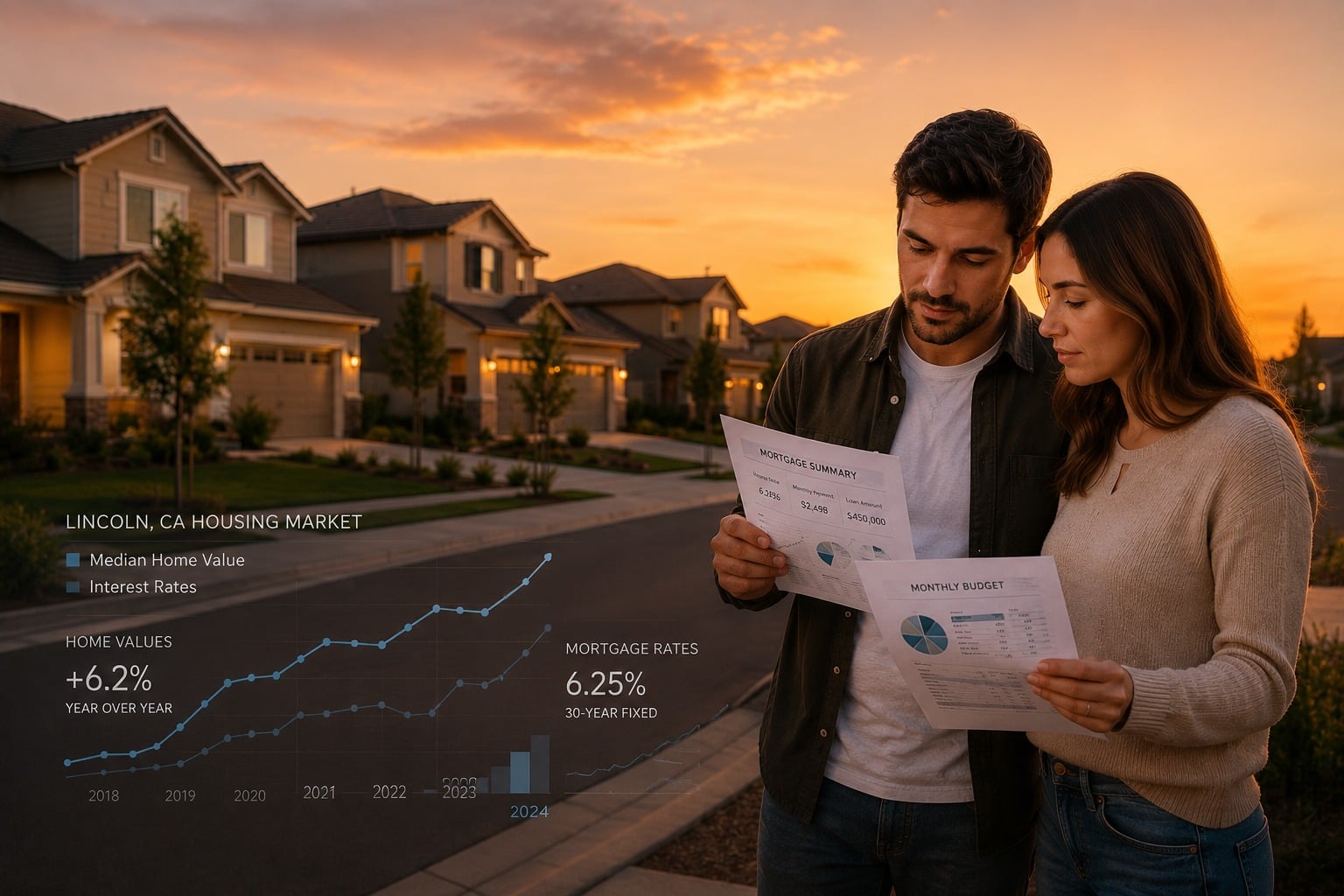
Buying a home has always been one of the biggest financial decisions people make. But in 2026, many buyers in Lincoln are facing a difficult question:
Should you buy now or wait?
Between fluctuating mortgage rates, rising home prices, economic uncertainty, and nonstop housing market headlines, it’s understandable why many buyers feel hesitant. Some are hoping rates will fall. Others are waiting for prices to drop. Many simply want “the perfect time” to make a move.
The challenge is that waiting often carries a financial cost that buyers underestimate.
In real estate, time can quietly become expensive. A small increase in mortgage rates or home prices can dramatically change your monthly payment, purchasing power, and long-term wealth potential. What feels like a cautious decision today could end up costing tens of thousands of dollars over the life of a loan.
For buyers in Lincoln, CA, understanding the true cost of waiting is more important than ever.
Why So Many Buyers Are Waiting in 2026
Today’s buyers are navigating a market unlike anything seen in the last decade.
Mortgage rates remain significantly higher than the ultra-low rates many people became accustomed to during 2020 and 2021. At the same time, home prices in desirable Northern California communities have remained surprisingly resilient.
This combination creates hesitation.
Many buyers are thinking:
- “What if rates go down next year?”
- “What if home prices crash?”
- “Maybe I should wait until the market cools.”
- “I don’t want to buy at the wrong time.”
These concerns are understandable. Nobody wants to overpay or feel rushed into a major financial commitment.
But housing markets rarely move in perfectly predictable ways. In fact, waiting for the “perfect” moment often leads buyers into a cycle of indecision while affordability quietly worsens.
The Hidden Financial Cost of Delaying a Home Purchase
Most buyers focus only on the home’s purchase price. But the real cost of waiting involves several moving parts working together:
- rising interest rates,
- home appreciation,
- rent increases,
- inflation,
- and lost equity growth.
Think of it like standing on a moving walkway at the airport except the walkway is moving backward. If you stand still financially, you may actually lose ground over time.
Even modest market changes can create major affordability shifts.
For example, a buyer shopping for a $650,000 home today may qualify comfortably at one payment level. But if rates rise by just 1% while prices increase 5%, that same buyer could suddenly face a dramatically higher monthly payment.
The result?
Some buyers end up:
- reducing their budget,
- draining more savings,
- moving farther away,
- or postponing homeownership altogether.
How Rising Interest Rates Change Monthly Payments
Interest rates have an enormous effect on affordability.
Many buyers underestimate how much even a small rate increase impacts their monthly mortgage payment.
Here’s a simplified example:
- Home price: $650,000
- Down payment: 10%
- Loan amount: $585,000
At a 6% interest rate, the estimated principal and interest payment is dramatically lower than it would be at 7%.
That single percentage-point increase can add hundreds of dollars per month and potentially well over $100,000 in interest over the life of the loan.
This is why buyers who delay hoping for slightly lower prices may accidentally lose affordability if rates rise faster than prices fall.
Mortgage math can be unforgiving.
Even more important, higher rates reduce buying power. Buyers may qualify for less house despite earning the same income.
That can mean:
- fewer available homes,
- more compromises,
- or losing access to neighborhoods they originally wanted.
Why Home Prices in Lincoln, CA Continue to Matter
Lincoln continues to attract buyers looking for:
- suburban lifestyle,
- newer communities,
- family-friendly neighborhoods,
- larger homes,
- and relative affordability compared to other California markets.
Because of these factors, demand has remained relatively stable even during periods of higher rates.
While markets naturally fluctuate, long-term real estate trends historically favor appreciation over time especially in desirable growth communities.
Waiting for dramatic price crashes can become risky because:
- inventory may remain limited,
- buyer demand can return quickly,
- and lower rates often increase competition.
Ironically, if mortgage rates drop substantially, more buyers may flood the market again, potentially pushing prices higher.
That means waiting for lower rates does not always create lower payments.
Sometimes it creates bidding wars.
Renting Longer May Cost More Than You Think
Many buyers compare today’s mortgage payment to current rent and feel discouraged.
But one critical factor often gets ignored:
Rent rarely stays flat forever.
In California markets, rents have historically trended upward over time. A renter who delays buying for several years may spend tens of thousands of dollars without building equity.
Meanwhile, homeowners gradually increase ownership through principal paydown and appreciation.
Renting certainly makes sense in some situations. But long-term renting while waiting endlessly for perfect conditions can delay wealth-building opportunities significantly.
Homeownership is not just about monthly payments.
It’s also about:
- stability,
- fixed housing costs,
- equity growth,
- tax advantages,
- and long-term financial leverage.
The Opportunity Cost of Missing Equity Growth
One of the biggest hidden costs of waiting is lost equity accumulation.
Every mortgage payment typically does two things:
- pays interest,
- builds ownership.
Over time, homeowners build equity through:
- loan paydown,
- market appreciation,
- and forced savings.
Let’s say a buyer purchases a home today and the property appreciates moderately over five years.
Even modest appreciation can create substantial equity growth especially in California housing markets.
Buyers who wait may eventually enter the market at:
- higher prices,
- higher rates,
- and with less accumulated wealth.
This is why many longtime homeowners build net worth faster than renters, even when market conditions fluctuate.
Time in the market often matters more than perfectly timing the market.
Real Examples: Buying Now vs. Waiting One Year
Imagine two buyers in Lincoln, CA.
Buyer A Purchases Now
- Purchases at current pricing
- Begins building equity immediately
- Locks housing payment
- Has future refinance opportunities if rates decline
Buyer B Waits One Year
Buyer B hopes rates will improve.
But during that year:
- home prices rise modestly,
- rates remain elevated,
- and rents increase.
Now Buyer B faces:
- higher purchase price,
- larger down payment requirement,
- potentially similar monthly payment,
- and lost equity from the prior year.
This scenario happens more often than many buyers expect.
Waiting only helps financially if future conditions improve enough to offset:
- appreciation,
- inflation,
- and missed ownership gains.
That outcome is never guaranteed.
Why Timing the Market Rarely Works
Many buyers treat homebuying like stock market investing, trying to perfectly “buy the dip.”
The problem is that housing markets are deeply influenced by:
- interest rates,
- local inventory,
- demographics,
- construction supply,
- migration trends,
- and employment patterns.
Nobody consistently predicts the exact bottom of the housing market.
Even professional economists regularly disagree.
Buyers who spend years waiting for certainty often discover that certainty never fully arrives.
Instead of asking:
“Is this the perfect market?”
A better question may be:
“Am I personally financially ready to buy?”
That shift in mindset changes everything.
Strategies Buyers Can Use in Today’s Market
Buying in a higher-rate environment does not mean buyers are powerless.
There are still many smart mortgage strategies available in 2026.
Consider Temporary Rate Buydowns
Some buyers use:
- 2-1 buydowns,
- seller concessions,
- or lender credits
to reduce initial payments during the first years of ownership.
This can improve affordability during transitional periods.
Focus on Long-Term Affordability
The right home purchase should fit comfortably within your monthly budget and not stretch finances dangerously thin.
A sustainable payment matters more than chasing perfect market timing.
Refinance Later if Rates Improve
One major concept many buyers overlook:
You can refinance a mortgage later.
You cannot retroactively purchase a home at yesterday’s price.
If rates eventually fall, homeowners may have opportunities to refinance into lower payments.
Buyers who wait may miss out on both appreciation and refinancing flexibility.
Expand Loan Program Awareness
Many buyers assume they need:
- 20% down,
- perfect credit,
- or massive savings.
In reality, numerous loan programs may help qualified buyers purchase sooner than expected.
These can include:
- FHA loans,
- VA loans,
- Conventional 3% down programs,
- USDA financing,
- and down payment assistance options.
When Waiting Does Make Sense
Despite the risks of delaying, there are situations where waiting may absolutely be the smarter financial move.
For example:
- unstable employment,
- excessive debt,
- poor credit readiness,
- insufficient emergency savings,
- or uncertain relocation plans.
Buying before you’re financially prepared can create unnecessary stress.
The goal is not rushing into homeownership.
The goal is making an informed, sustainable decision.
A strong mortgage strategy should align with:
- your budget,
- career stability,
- future goals,
- and long-term lifestyle needs.
Final Thoughts on Buying vs. Waiting in 2026
The decision to buy a home in Lincoln should never be based purely on fear, headlines, or speculation.
Real estate markets constantly change. Mortgage rates fluctuate. Economic conditions evolve.
But one reality remains consistent:
Waiting has a cost.
Sometimes that cost appears through:
- higher monthly payments,
- rising prices,
- missed equity,
- increased rent,
- or reduced buying power.
The perfect market may never arrive.
For many buyers, the better approach is preparing financially, understanding available mortgage options, and making a smart long-term decision based on personal readiness and not market perfection.
Homeownership is rarely about finding flawless timing.
More often, it’s about creating long-term stability and opportunity over time.
FAQs
Should I wait for mortgage rates to go down before buying?
Not necessarily. Lower rates may also increase buyer competition and home prices. Buyers should evaluate affordability based on personal finances rather than trying to perfectly time the market.
Are home prices expected to fall in Lincoln, CA?
Housing markets fluctuate, but desirable suburban communities like Lincoln often maintain steady demand due to location, schools, and lifestyle appeal.
Can I refinance later if rates drop?
Yes. Many homeowners refinance when rates improve, potentially lowering monthly payments in the future.
How much does a 1% rate increase affect a mortgage payment?
Even a 1% increase can add hundreds of dollars monthly depending on the loan amount and purchase price.
Is renting cheaper than buying in 2026?
Short-term renting may sometimes cost less monthly, but renters do not build equity or benefit from long-term appreciation.


